Benny List may earn a commission when you buy through links on this page, at no extra cost to you. As an Amazon Associate, we earn from qualifying purchases.
Baby Registry Checklist for New Parents (2026)
Building a baby registry can feel overwhelming when you're staring at thousands of products with no clear starting point. This guide cuts through the noise with a complete, category-by-category checklist — including how many of each item you actually need, what's genuinely essential, what's nice to have, and what you can confidently skip.
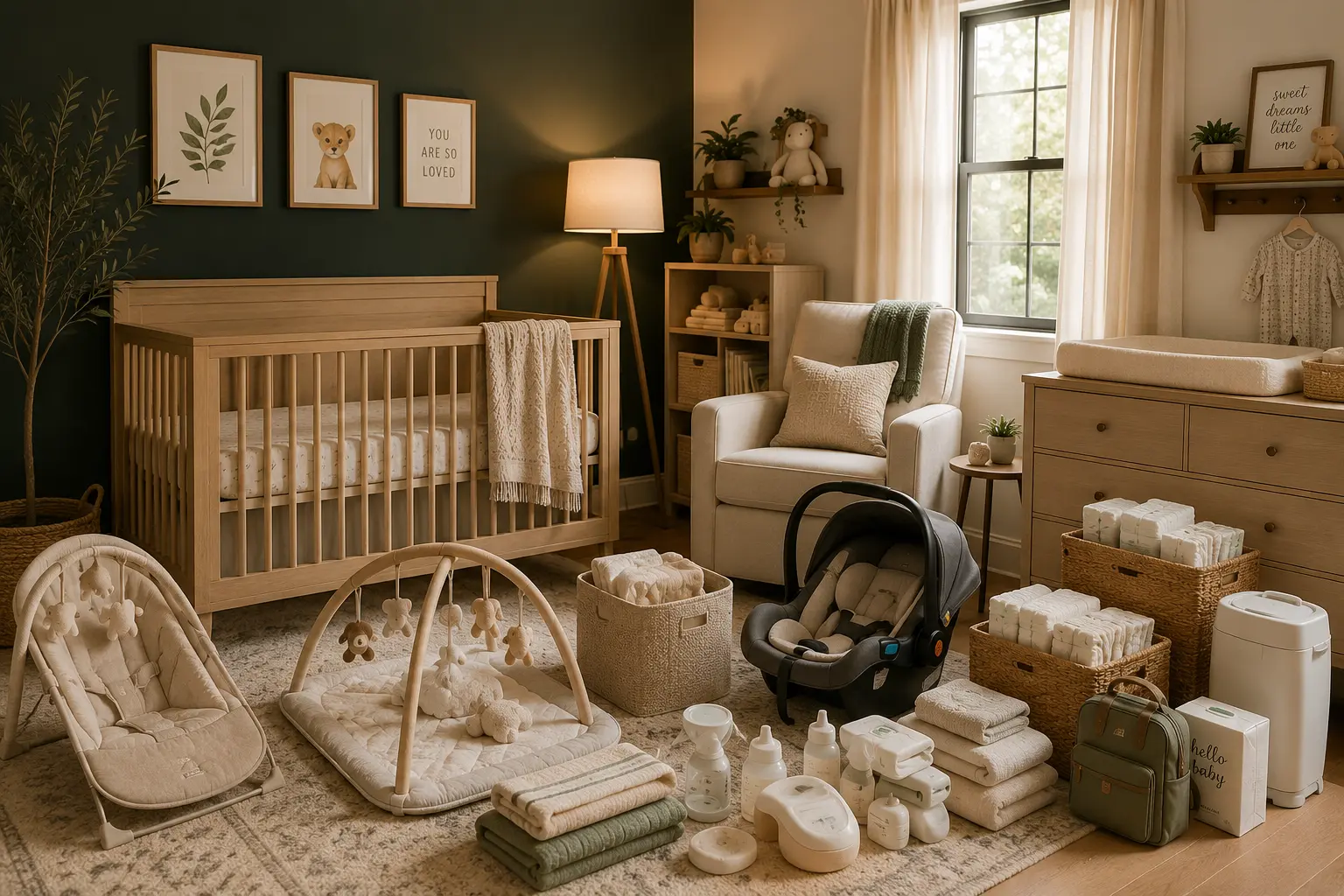
Most first-time parents end up with too much of the wrong stuff and not enough of the right stuff. The baby product industry is enormous and every item promises to be essential. In reality, your newborn needs a safe place to sleep, a way to eat, clean diapers, a few layers of clothing, and a way to get from one place to another safely. Everything else builds from there.
This checklist is organized into five categories — clothing, feeding, sleep, diapering, and travel and safety — with honest notes on quantities, timing, and what to skip. It's designed to work alongside BennyList's baby registry, where you can add items from any store and share one clean list with family and friends.
Timing Your Registry
When to start — and what to do when
Most parents start their registry around 12–16 weeks, which gives plenty of time to research without feeling rushed. Here's a simple trimester-by-trimester timeline.
Start your registry
Begin with big-ticket items — crib, stroller, car seat — and include a range of price points. Don't wait until the shower invites go out.
Fill in the details
Add clothing, feeding items, diapering essentials, and nursery basics. Research brands and read reviews at your own pace.
Share your registry
Send it before shower invitations go out so guests have time to shop. Include items at multiple price points — from under $20 to over $200.
Complete your registry
Buy any remaining essentials yourself. Many retailers offer a registry completion discount of 10–15% on unpurchased items.
Baby registry checklist by category
Each item below includes a quantity guide and a note on what actually matters when choosing. Start with the essentials in each category before adding nice-to-haves.
Newborn clothing and comfort
Bodysuits / onesies
Start with 6–8 in 0–3 month size. Newborn size is often skipped — many babies outgrow it in weeks.
Zip-up sleepers
Aim for 4–6. Zips are far easier than snaps at 3am. Look for two-way zippers for faster diaper changes.
Swaddle blankets
Register for 4–6. They double as nursing covers, stroller covers, burp cloths, and tummy-time mats.
Receiving blankets
3–4 is plenty. Thinner than swaddles and useful for layering.
Burp cloths
You'll want 8–10. They disappear fast. Thicker, contoured styles tend to stay on your shoulder better.
Hats, mittens, and socks
2–3 hats for the first weeks; socks get lost constantly — register for several multipacks.
Pacifiers
Register for 2–3 styles. Babies have strong preferences — you won't know which shape they like until they're here.
Nail clippers and grooming kit
Baby nails grow fast and are razor-sharp. A simple kit with a file and soft-tip clippers is essential.
Feeding essentials
Bottles (starter set)
Register for 4–6 in different styles or brands. Like pacifiers, babies have preferences — don't stock up on one brand before birth.
Bottle brush and drying rack
One good brush and a rack that actually fits your counter. You'll use both daily.
Breast pump and accessories
Most insurance plans cover a breast pump — check before registering. Extra flanges and milk storage bags are always useful to add.
Nursing pillow
The C-shaped style (like a Boppy or similar) supports arm and back position during feeds and doubles as a supported sitting prop at 3–4 months.
Bibs
Register for 8–10. Silicone pocket bibs are easier to clean; soft cotton ones are gentler on newborn skin.
Milk storage bags or containers
If pumping, you'll go through these quickly. Register for at least two boxes.
Formula dispenser or pitcher
Optional if you plan to breastfeed, but worth having as a backup. Formula preferences can change — don't overbuy before baby arrives.
High chair
Not needed until 4–6 months. Add it to your registry but don't rush the purchase. Look for one that reclines slightly for younger babies.
Nursery and sleep
Bassinet or bedside sleeper
Many pediatricians recommend starting in a bassinet for the first 3–4 months before transitioning to a crib. The closeness makes night feeds easier.
Crib and firm crib mattress
A firm, flat mattress with a tight-fitting sheet is the AAP-recommended safe sleep setup. Avoid mattresses with padding or pillow-top layers.
Fitted crib sheets
Register for at least 3–4. Blowouts happen at night — you'll want a clean sheet available without doing laundry at 2am.
Blackout curtains
One of the most underrated sleep items. Babies sleep better in a dark room — this helps with naps especially.
Baby monitor
Video monitors give more peace of mind than audio-only. Look for one with a wide-angle view and night vision.
Sound machine
White noise mimics the womb and helps babies settle. A simple, dedicated machine is more reliable than a phone app.
Changing pad or dresser topper
A waterproof contoured pad with safety strap. Register for 2–3 waterproof covers so you always have a clean one.
Wearable swaddle (zip-up style)
Products like a zippered swaddle sack let you swaddle safely without learning to wrap. Especially helpful for nervous first-timers.
Diapering
Diapers (size 1 and size 2)
Don't overbuy newborn size — many babies skip it or outgrow it in days. Stock up on Size 1 and Size 2 instead. Register for variety packs to test brands.
Wipes
You'll use hundreds per week. Register for bulk packs. Fragrance-free, thick wipes are gentler on newborn skin.
Diaper rash cream
A zinc oxide-based cream is standard. Register for two or three so you have one at each changing station.
Diaper pail
A pail with a tight seal matters — especially in a nursery. Register for one with its dedicated refill bags to avoid incompatible replacements.
Changing pad covers
Register for 3–4 waterproof covers. These get dirty constantly.
Portable changing pad
A small foldable mat for diaper bag changes. Waterproof and easy to wipe down.
On-the-go and safety
Infant car seat
The single item you cannot skip. You'll need it to leave the hospital. Look for one with a no-rethread harness and side-impact protection.
Full-size stroller
Check that it's compatible with your car seat for a travel system. Think about your lifestyle — city walkers need different features than suburban drivers.
Lightweight or compact stroller
Optional at first, but many parents add a lightweight option by 6 months when travel becomes more frequent.
Diaper bag
A backpack-style bag distributes weight better and frees both hands. Look for insulated pockets and a built-in changing pad.
Baby carrier or wrap
Essential for hands-free carrying, travel, and soothing a fussy baby. Soft-structured carriers work from birth; wraps have a steeper learning curve but are very versatile.
Bath tub and bath essentials
An infant tub with a reclined newborn insert is safest. Register for fragrance-free baby wash and shampoo — one bottle often does both.
Infant thermometer
A rectal thermometer is the most accurate for newborns. A forehead or ear thermometer is more convenient but less precise.
Baby first aid kit
Includes nail file, nasal aspirator, thermometer, and basic medicines. Many hospitals supply some of these — check before buying.
Cut Through the Noise
Must-have, nice-to-have, and skip
Not every baby product deserves a spot on your registry. Here's a plain-English breakdown of what's genuinely essential, what's helpful but optional, and what's safe to leave off entirely.
Must-haves
These are the items you genuinely cannot skip. Buy or receive them before baby arrives.
- Infant car seat — you need this before leaving the hospital
- Safe sleep surface (bassinet or crib with firm mattress)
- At least one feeding setup (bottles, nursing pillow, or pump depending on your plan)
- Diapers and wipes — stock Size 1, not just newborn
- Onesies and zip-up sleepers in 0–3 month size
- Swaddle blankets (4–6)
- Baby monitor with video
- Diaper bag with built-in changing mat
Nice to have
Genuinely useful but not essential. Add these once your core list is covered.
- Sound machine — genuinely helpful but a fan works too
- Baby carrier or wrap — great for soothing but a learning curve
- Nursing pillow — helpful, especially for C-section recovery
- Bouncer or swing — babies vary wildly on preferences, borrow first if you can
- Wipe warmer — nice but definitely not essential
- Bottle sterilizer — a pot of boiling water does the same job
Skip these
Popular items that rarely earn their place — or that have better, simpler alternatives.
- Diaper stacker — decorative, not functional
- Crib bumpers — removed from most registries for safety reasons
- Baby food maker — a blender works just as well
- Bottle warmer — a bowl of warm water is equally effective
- Shoes before 12 months — purely decorative and babies hate them
- Newborn-only items you'll use for 4–6 weeks (e.g. newborn-only loungers)
How to build a registry that actually works for you
The biggest mistake new parents make is building a registry based on what looks impressive rather than what fits their actual life. A family in a city apartment with a walkable neighborhood needs completely different gear than a family in a car-dependent suburb. A parent who plans to breastfeed exclusively has a different feeding setup than one planning to formula feed or mix.
Start by thinking about your daily routines: how you'll feed, where baby will sleep, how much you'll be driving versus walking, whether you have space for a full-size stroller, and whether anyone nearby will be helping in the early weeks. Your registry should reflect your life, not a generic version of early parenthood.
For items where babies have strong personal preferences — bottles, pacifiers, bouncers, swaddle styles — register for a small variety rather than buying in bulk before birth. You'll quickly find out what your baby tolerates and what they reject, and then you can stock up on what works.
Finally, include items at a wide range of price points. A mix of items under $20, $20–$75, and $75–$200+ means every guest can find something that fits their budget. Consumables like diapers, wipes, and extra sheet sets are popular gift choices because they're practical and easy to choose — don't underestimate how many people appreciate having a simple, obviously-useful option.
Ready to start your registry?
Create a baby registry that keeps everything in one place
Add essentials from any store, organize by category, and share one clean link with family and friends — no retailer lock-in required.
Baby registry by price point
A well-built baby registry covers all three spending tiers. Under $25, popular picks include burp cloths, bibs, pacifiers, fitted sheets, diapering supplies, and basic clothing. These items are easy for guests to purchase without overthinking and they disappear fast in practice.
In the $25–$100 range, look at sound machines, nursing pillows, bottle starter sets, bath kits, diaper pails, and baby carriers. These are the items that get daily use and where quality makes a noticeable difference.
Above $100, the big-ticket necessities are the car seat, crib, bassinet, stroller, and baby monitor. These are the items guests often want to go in on together as a group gift. Make it easy for them by including a note or keeping your registry updated so they know what's still available.
A rough target: aim for roughly 30% of registry items under $25, 40% between $25–$100, and 30% over $100. This ensures every guest finds something that works for their budget and that your most important items actually get purchased.
BennyList can also help beyond the baby stage. As your child grows, you can organize a birthday wishlist, plan seasonal gifts, or use Discover to find ideas for every occasion.
Baby registry frequently asked questions
What should be on a baby registry checklist?
A complete baby registry checklist should cover five core areas: newborn clothing, feeding supplies, sleep essentials, diapering basics, and travel and safety gear. Within each category, focus on items you'll use daily in the first three months rather than loading up on specialty products you may never reach for. A strong registry also includes items at multiple price points so every guest can find something comfortable for their budget.
How many items should be on a baby registry?
Most registry experts recommend registering for more items than your expected guest count, with a range of price points from under $20 to over $200. A registry of 60–80 items gives guests plenty of choice without feeling overwhelming. Lean toward including everyday consumables like diapers, wipes, and extra sheets — people love buying practical items and you'll go through them fast.
When should you start a baby registry?
Most parents start their baby registry between 12 and 20 weeks of pregnancy. Starting early gives you time to research products thoroughly, compare options, and update the list before shower invitations go out — usually around weeks 28–30. It also means you can take advantage of registry completion discounts closer to your due date.
What size diapers should I put on my baby registry?
Skip loading up on newborn diapers. Many babies — especially larger ones — outgrow newborn size within days or weeks. Register primarily for Size 1 and Size 2 diapers, and include variety packs from different brands so you can find what works best for your baby's body shape without committing to one brand in bulk.
Do I need both a bassinet and a crib on my registry?
It's common to use both at different stages. A bassinet keeps baby close in the early weeks, making night feeds easier and following AAP safe sleep guidelines about room-sharing. Most babies transition to a crib around 3–4 months. If budget is a concern, a bedside bassinet that converts or a pack-and-play with a newborn insert can serve both purposes.
Can you add baby registry items from different stores?
Yes. BennyList makes it easy to add baby registry items from any store, so you're not limited to a single retailer. This gives you more flexibility to choose the best products at the best prices and makes it simpler for gift-givers who prefer to shop at specific stores.
What baby registry items can I skip?
Several popular registry items are rarely used in practice. Crib bumpers are no longer recommended for safety reasons. Diaper stackers, bottle sterilizers (a pot of boiling water works just as well), and wipe warmers are nice but rarely essential. Shoes before 12 months are decorative at best. When in doubt, skip anything that serves only one very specific purpose in a narrow time window.
How do I choose between similar baby products?
Start with safety certifications and pediatric recommendations — especially for sleep items, car seats, and feeding gear. Then read reviews from parents with similar lifestyles. For items where babies have strong personal preferences (bottles, pacifiers, swaddles), register for a small variety rather than committing to one brand. You can always buy more of what works after baby arrives.
Related Guides
Keep exploring gift planning ideas
Start your free baby registry today
Use BennyList to organize your registry, add items from any store, and share one simple link with the people who want to help most.
No spam — just seasonal gift guides and BennyList tips.