Benny List may earn a commission when you buy through links on this page, at no extra cost to you. As an Amazon Associate, we earn from qualifying purchases.
Baby Registry Essentials for First-Time Parents
A baby registry can get overwhelming quickly. This guide focuses on the essentials first: the clothing, feeding, sleep, diapering, travel, and safety items most new parents actually use in the first months.
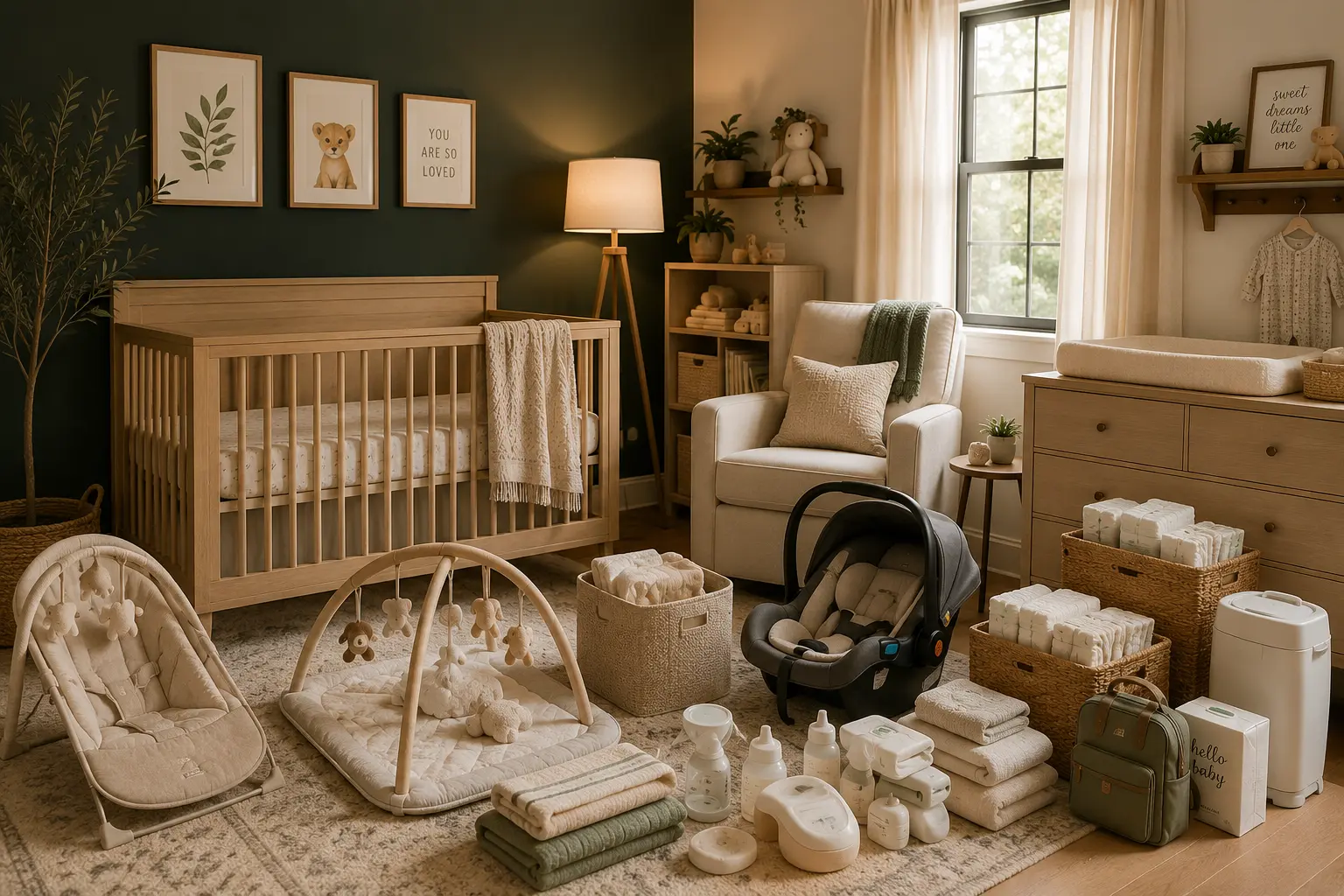
Baby products can feel endless, but newborns do not need everything. The best baby registry essentials are the items that support daily care: safe sleep, feeding, diapering, clothing, travel, and basic health.
With BennyList’s baby registry, you can add essentials from any store and keep everything organized in one shareable list. That helps family and friends choose gifts that are practical, useful, and easy for you to manage.
Quick List
The baby registry essentials to add first
Infant car seat
Safe sleep space: bassinet or crib with firm mattress
Diapers and wipes
Zip-up sleepers and bodysuits
Bottles or feeding supplies
Swaddles and burp cloths
Baby monitor
Diaper bag and portable changing mat
Essentials by Category
What to put on your baby registry
Start with the categories below, then add extras based on your home, feeding plan, climate, transportation, and personal preferences.
Newborn clothing essentials
Bodysuits / onesies
Start with 6–8 in 0–3 month size. Newborn size can be useful, but many babies outgrow it quickly.
Zip-up sleepers
Register for 4–6. Two-way zippers make nighttime diaper changes much easier than snaps.
Swaddle blankets
Add 4–6. They work for swaddling, stroller covers, burp cloth backups, and tummy-time mats.
Burp cloths
Register for 8–10. Spit-up happens constantly, and these disappear into laundry faster than expected.
Socks and hats
A few soft hats and several pairs of socks are useful in the early weeks, especially for cooler weather.
Sleep sacks
Once baby is ready to transition out of swaddles, sleep sacks are a safer blanket alternative.
Feeding essentials
Bottle starter set
Choose a small variety rather than buying one brand in bulk. Babies can be picky about bottle shape and flow.
Bottle brush and drying rack
A bottle brush and an open-air drying rack are used multiple times every single day if you bottle feed or pump — these are genuinely essential rather than optional. Choose a brush with a nipple cleaner attachment and a rack that fits your counter space without tipping easily.
Nursing pillow
Helpful for feeding support, especially during long sessions or C-section recovery.
Bibs
Register for 8–10. Soft cotton bibs are good early; silicone pocket bibs are better once solids start.
Milk storage bags
Pre-sterilized milk storage bags are essential if you plan to pump and build a freezer stash. Register for a few boxes (100–200 bags) rather than waiting until you need them — running out mid-rotation is frustrating. Bags from Lansinoh and Medela are widely trusted for minimal leaking.
High chair
Not needed immediately, but worth adding since guests often like buying practical future-use items.
Sleep and nursery essentials
Bassinet or bedside sleeper
Useful for the first few months when baby sleeps in your room and night feeds are frequent.
Crib and firm mattress
A firm, flat sleep surface with a tight-fitting sheet is one of the most important nursery purchases.
Fitted crib sheets
Register for 3–4. Middle-of-the-night changes are much easier when clean sheets are ready.
Baby monitor
A video monitor gives peace of mind and helps you check on baby without entering the room.
Sound machine
White noise is one of the most effective tools for helping babies settle and stay asleep by masking household sounds — dogs barking, other children, doorbell, TV. Choose a machine with multiple sound options and a volume range that can reach 65+ decibels. Hatch, Yogasleep, and LectroFan are consistently well-reviewed.
Blackout curtains
Blackout curtains are one of the most impactful nursery additions for improving nap length and early bedtime — light is a major signal to babies that it is time to wake up. Look for panels rated 99–100% light blocking; regular darkening curtains still let in enough ambient light to disrupt sleep.
Diapering and bath essentials
Diapers in Size 1 and Size 2
Avoid overbuying newborn diapers — many babies outgrow them within the first 2–4 weeks, sometimes before they even arrive. Register for one or two small packs of newborn and stock up on Size 1 and Size 2 instead. Having a variety of brands is also smart since fit varies significantly by baby's shape.
Wipes
Register for bulk fragrance-free, unscented wipes — you will go through more than you expect (easily 10–15 per day in the early weeks). Fragrance-free is the safest default for newborn skin. Water Wipes, Pampers Sensitive, and Seventh Generation are reliable gentle options.
Diaper rash cream
Add two or three tubes so you can keep one near each changing station and one in the diaper bag.
Changing pad
A waterproof changing pad or dresser topper makes diaper changes safer and easier to clean.
Portable changing mat
A compact foldable changing mat is essential for diaper changes away from home — most public restrooms have a changing table but no clean surface. Look for one that wipes clean easily, folds to fit in a diaper bag pocket, and has raised edges to prevent rolling.
Baby bathtub
An infant tub with a newborn insert is easier and safer than trying to hold a slippery newborn in a full tub.
Travel and safety essentials
Infant car seat
This is non-negotiable. You need an installed car seat before leaving the hospital.
Stroller or travel system
Choose based on your lifestyle: sidewalks, car travel, storage space, and how often you will fold it.
Diaper bag
Backpack styles keep hands free. Look for insulated pockets and a built-in changing pad.
Baby carrier
A quality baby carrier is used constantly for soothing a fussy baby, running errands, traveling, and staying hands-free at home. Stretchy wraps work well for newborns; structured carriers like Ergobaby, Lillebaby, or Tula grow with baby and are easier to use long-term as they get heavier.
Infant thermometer
A reliable thermometer is one of the most important health items to have ready before baby arrives.
First aid and grooming kit
Add nail clippers, nasal aspirator, thermometer, medicine syringe, and basic grooming tools.
Price Points
Baby registry essentials by budget
A helpful baby registry includes affordable everyday gifts, mid-range basics, and larger essentials for close family or group gifting.
Under $25
- Pacifiers
- Burp cloths
- Baby wash
- Nail clippers
- Bibs
- Diaper cream
$25–$75
- Swaddle set
- Changing pad covers
- Bottle starter set
- Sound machine
- Baby bathtub
- Diaper bag insert
$75–$150
- Baby monitor
- Nursing pillow
- High chair
- Baby carrier
- Bassinet accessories
- Quality diaper bag
$150+
- Infant car seat
- Crib and mattress
- Stroller
- Bassinet
- Travel system
- Convertible high chair
First-Year Planning
When different baby essentials become useful
Some registry items are needed immediately, while others become useful months later. This helps you prioritize what to add first.
Survival essentials
Car seat, safe sleep space, diapers, wipes, feeding supplies, sleepers, swaddles, burp cloths, and basic health items.
Daily routine items
Baby monitor, sound machine, stroller, carrier, diaper bag, extra sheets, bath items, and more clothing in larger sizes.
Growth and feeding changes
High chair, silicone bibs, sleep sacks, toys, teething items, and stroller accessories become more useful.
Future-use items
Convertible car seat, larger clothes, babyproofing, feeding gear, activity toys, and travel upgrades.
Skip or Delay
Baby registry items that are not essential for everyone
These items may be useful for some families, but they are not the first things most new parents need.
Too many newborn-size clothes
Babies grow quickly, and some skip newborn sizing entirely. Focus more on 0–3 and 3–6 month items.
Baby shoes
Cute, but not necessary before walking. Soft socks or booties are more useful.
Wipe warmer
Nice for some families, but not essential. Many parents stop using them after the first few weeks.
Bottle sterilizer
Helpful for convenience, but not required for every household. A pot of boiling water can often do the job.
Large toy collections
Newborns need very little entertainment at first. Add a few simple toys and save the rest for later.
Flexible Baby Registry
Build a baby registry with essentials from any store
BennyList helps you organize baby essentials, future-use items, and gift ideas in one shareable registry, even when products come from different retailers.
Keep everything organized
Clothing, feeding, sleep, diapering, and travel items can all live in one list.
Add from any store
Choose the products you actually want instead of being limited to one retailer.
Update as baby grows
Add future-size clothes, feeding items, toys, and safety products whenever you are ready.
FAQ
Baby registry essentials questions
What are the most important baby registry essentials?
The most critical baby registry essentials fall into five categories: safe sleep (bassinet or crib with firm mattress, fitted sheets, swaddles), feeding (burp cloths, bottles, nursing pillow), diapering (Size 1–2 diapers, wipes, barrier cream, changing pad), clothing (zip sleepers, onesies in 0–3 month), and travel/safety (infant car seat, diaper bag). A baby monitor, sound machine, and basic health kit round out the must-have list.
What should first-time parents put on a baby registry?
First-time parents should build the registry in order of daily-use frequency: sleep essentials first, then feeding, diapering, clothing, and travel. Cover the first three months before adding future-use items like high chairs, activity gyms, and babyproofing gear. Include items across all price tiers — under $25 (consumables, burp cloths), $25–$75 (individual items), and $75+ (group-gift items like car seat and stroller).
How many items should be on a baby registry?
60–80 items is a practical range for most baby registries. Enough variety that every guest finds something in their budget, but focused enough to feel intentional. Roughly a third under $25 (wipes, burp cloths, onesies, books), a third between $25–$100 (individual gear items), and a third over $100 for group-gift candidates (car seat, bassinet, monitor, stroller).
What baby registry items should I skip or delay?
Items to skip or delay: too many newborn-size clothing (many babies outgrow it in days), baby shoes before walking, wipe warmers, bottle sterilizers (boiling water works), large activity centers (not useful until 4–6 months), and specialty gadgets that solve problems you have not yet encountered. Wait until you know your baby's preferences before buying bulk of any one bottle or diaper brand.
Should I register for newborn size diapers?
Register for a small amount of newborn diapers — one pack at most. Focus the diaper registry on Size 1 and Size 2, which fit most babies from birth through 3–4 months. Many babies never fit newborn size, or use it for only a few days. Adding a variety of diaper brands in Size 1 helps you find the best fit without committing to bulk.
What baby items do parents actually use most in the first 3 months?
The items parents report using most in the first three months: zip-up sleepers, burp cloths (constantly), a nursing or feeding pillow, swaddle blankets, a sound machine, blackout curtains, a video baby monitor, the infant car seat, and a diaper bag. After those: a bouncer or swing (varies by baby), a baby carrier, and gift cards for consumables.
Related Guides
Keep planning your registry
No spam — just seasonal gift guides and BennyList tips.