Benny List may earn a commission when you buy through links on this page, at no extra cost to you. As an Amazon Associate, we earn from qualifying purchases.
Newborn Essentials Checklist (2026)
A simple newborn essentials checklist covering clothing, diapering, feeding, sleep, bath, health, and on-the-go basics for the first months with a baby.
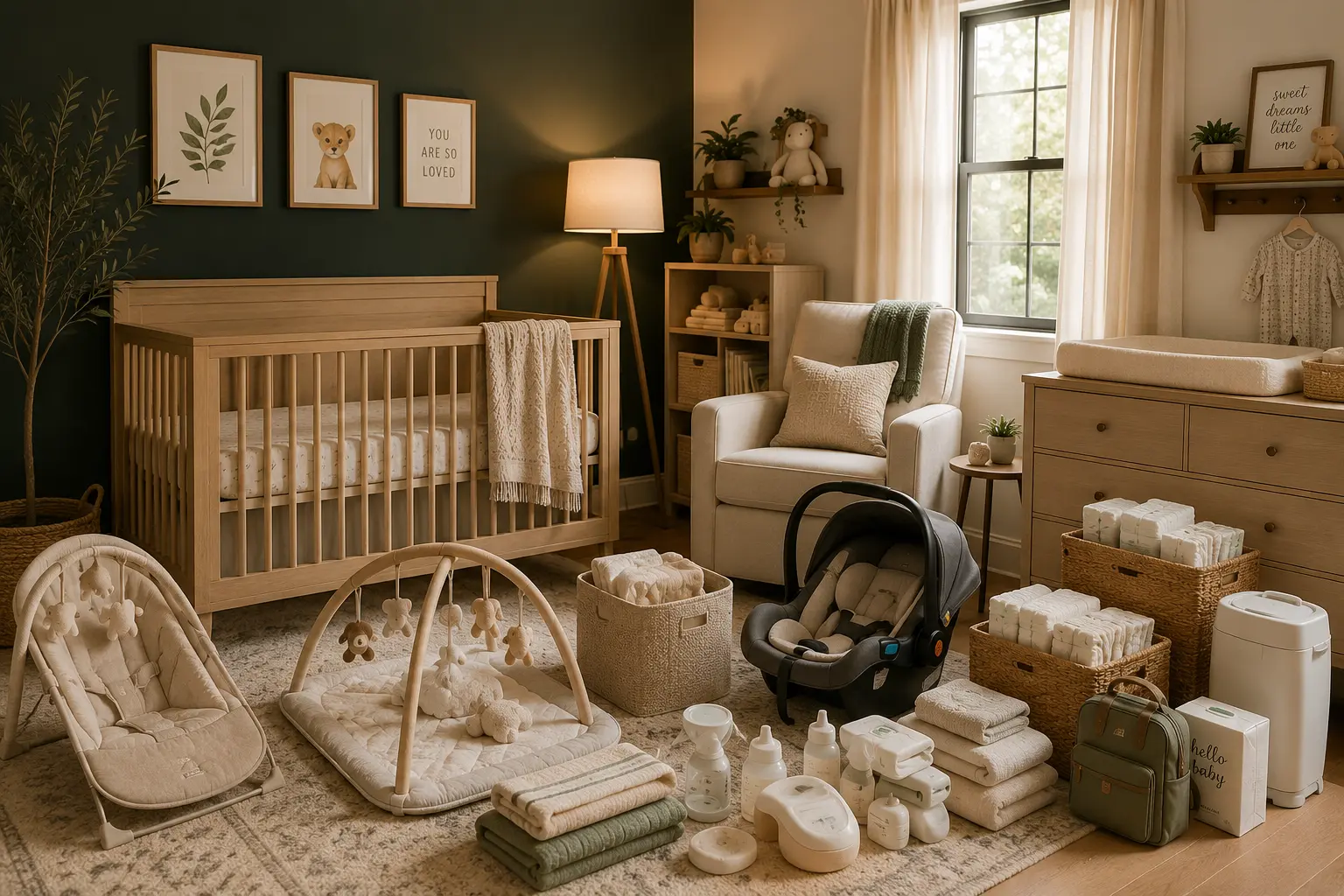
A newborn essentials checklist should help you prepare for real daily life with a baby, not pressure you into buying every product marketed to new parents. The most useful items are the ones that support feeding, sleep, diaper changes, bath time, and safe travel.
This checklist is organized by category so you can quickly see what matters most before the baby arrives. Use it as a practical planning guide for your registry, then adjust based on your home, budget, and support system. BennyList helps you organize baby gift ideas from any store, keep essentials in one place, and share your registry with family and friends when you are ready.
Quick Tips
Before you build your baby registry
Buy enough for the first few weeks, not the entire first year.
Choose simple, washable items over complicated baby gear.
Register for practical backups like extra sheets, burp cloths, wipes, and diapers.
Keep the nursery functional before focusing on decor.
Avoid buying too much of one brand until you know what works for your baby.
Use your registry as a living checklist you can update after birth.
Baby Registry Guide
What to include
Use these sections as a practical starting point. Add what fits your home, lifestyle, and support system — then skip anything that does not match the way you actually plan to care for your baby.
Clothing essentials
Keep newborn clothing simple, soft, and easy to change.
Zip-up sleepers
Two-way zip sleepers are far easier than snap closures for nighttime diaper changes when you are half asleep. Register for 4–6 in 0–3 month and 3–6 month sizes. Avoid loading up on newborn size — many babies outgrow it in the first week or two.
Short-sleeve and long-sleeve onesies
A small mix of both styles gives you layering options for different seasons and indoor temperatures. Onesies under sleepers add warmth; alone they are great for warm weather. Multipacks are the most budget-friendly way to stock up.
Socks or booties
Newborn feet lose warmth quickly and babies can't regulate temperature as well as older children. Soft socks or booties help when baby is in gowns or onesies, especially in the hospital and in air-conditioned rooms.
Soft hats
Most hospitals send babies home with a hat for warmth. Register for 2–3 soft stretchy hats for the early weeks, particularly if you're due in fall or winter. They're easy to put on and genuinely useful in the first few weeks.
Diapering essentials
You will use these many times a day — every day.
Diapers in Size 1 and Size 2
Newborn size is quickly outgrown — many babies skip it entirely or use it for less than two weeks. Register primarily for Size 1 and Size 2, and include variety packs from a few brands so you can find the best fit without buying bulk before you know what works.
Fragrance-free wipes
Fragrance-free, thick wipes are gentler on newborn skin and less likely to cause irritation. Register for several bulk packs — you will go through them constantly. Thicker wipes with some texture do a better job in fewer passes.
Diaper cream
A zinc oxide barrier cream prevents and treats diaper rash caused by the frequency of changes in the newborn stage. Apply as a preventive layer rather than waiting for visible irritation. Inexpensive to register for and consistently used.
Changing pad or portable mat
A contoured changing pad with a waterproof cover and safety strap is the most practical setup. Register for 2–3 waterproof covers so you always have a clean one available. A portable flat mat is also useful for travel and changing in other rooms.
Feeding essentials
Basics that help across every feeding style.
Burp cloths
One of the most consistently used newborn items regardless of how you feed. Register for 8–10 thick, contoured burp cloths. They live near every feeding spot, the diaper bag, and the crib. Thicker styles stay on your shoulder better and absorb more than flat ones.
Bottles in a starter set
Babies have strong preferences for bottle shape, nipple material, and flow rate that you cannot predict before birth. Register for 4–6 bottles in a couple of different styles rather than a full set of one brand. Stock up on what works after you discover your baby's preference.
Bottle brush and drying rack
A dedicated bottle brush and a countertop drying rack are essential if you bottle feed or pump. Used every single day, easy to gift, and inexpensive — a practical registry item in the under-$25 category.
Nursing or feeding pillow
A C-shaped nursing pillow improves arm and back positioning during feeding and reduces shoulder fatigue during longer sessions. It also serves as a supervised sitting support at 3–4 months. Especially helpful during postpartum recovery when holding weight is uncomfortable.
Sleep essentials
Focus on safe, simple sleep above everything else.
Safe sleep surface
A crib, bassinet, or play yard specifically designed for infant sleep is one of the most important items on any newborn checklist. The AAP recommends a firm, flat surface with no incline. Avoid inclined sleepers, soft mattresses, and any product not designed for infant sleep.
Firm flat mattress with fitted sheets
Use only the mattress designed for your crib or bassinet — it should fit snugly with no gaps. Register for 2–3 fitted sheets so overnight accidents don't require a midnight laundry run. Waterproof mattress pads protect the surface and make cleanup easier.
Swaddles or sleep sacks
Many newborns settle faster when swaddled because it mimics the snug feeling of the womb. Register for 4–6 swaddle blankets or zippered swaddle sacks. Once babies show signs of rolling, transition to a sleep sack without arm restriction.
Sound machine
White noise helps newborns settle and stay asleep by masking household sounds and approximating womb sounds. A simple dedicated machine is more reliable than a phone app that may interrupt or shut off. One of the most consistently praised purchases by new parents.
Bath and health essentials
Small items that prevent stressful late-night store runs.
Baby bathtub with newborn insert
An infant tub with a reclined newborn sling keeps baby safely supported for early baths — essential until the umbilical stump heals and babies can sit more steadily. A tub that adjusts across stages gives you more mileage from one purchase.
Soft washcloths and hooded towels
Soft washcloths are used for every bath and for gentle face wipes between baths. Hooded towels wrap the whole baby quickly after a bath and help maintain warmth. These are inexpensive, practical, and popular with guests looking for easy registry items.
Rectal thermometer
A rectal thermometer is the most accurate for newborns and is often required when reporting a temperature to a pediatrician in the first months of life. This is an essential health item — not optional. Buy one before the baby arrives.
Nail file or soft nail clippers
Newborn nails grow fast and are sharper than they look. Scratching the face is common in the first weeks. A glass nail file or soft baby nail clippers helps safely manage this. Many parents find filing easier than clipping on a newborn.
Travel essentials
Items you need before you leave the hospital.
Infant car seat
The single item you need before anything else — hospitals require a car seat for discharge. Confirm fit in your vehicle before purchase. Look for a no-rethread harness and side-impact protection. This is ideal for group gifting from grandparents or close family.
Diaper bag
A backpack-style diaper bag distributes weight evenly and keeps both hands free. Look for insulated pockets for bottles, a built-in changing pad, and enough compartments to stay organized without digging through everything to find a wipe.
Stroller or baby carrier
A travel system that pairs your infant car seat with a stroller base is the most seamless setup. A soft-structured baby carrier is essential for hands-free carrying, quick errands, and soothing a fussy baby. Many families use both — choose based on your lifestyle.
Extra change of clothes in the bag
Always keep a spare onesie, sleeper, and pair of socks in the diaper bag. Blowouts and spit-up happen at the worst possible times. Pack one extra outfit for baby and consider one for yourself as well.
Frequently asked questions
What are the true newborn essentials?
The true newborn essentials are six categories: safe sleep (bassinet or crib with firm mattress, fitted sheets, swaddles), feeding (burp cloths, bottles, nursing pillow), diapering (Size 1–2 diapers, fragrance-free wipes, barrier cream, changing pad), clothing (zip sleepers, onesies), bath and health (infant tub, soft washcloths, thermometer, nail care), and travel (infant car seat, diaper bag). Everything else can wait until you know your baby and your routine.
How many newborn outfits do I actually need?
Most families do well with 6–8 sleepers and 6–8 onesies in 0–3 month size, plus some 3–6 month backup. More important than a specific number is having enough to get through 2–3 days between laundry. Avoid filling a closet with specialty outfits — zip sleepers are what you will actually reach for at 3am.
What newborn items do most parents not use?
The most consistently unused newborn items are wipe warmers, bottle warmers, sleep positioners and wedges (removed from AAP recommendations), large decorative items, shoes (before walking), large activity centers (not appropriate until 4–6 months), and large quantities of one diaper brand or bottle style before you know your baby's preferences.
Do I need every newborn essential before the baby arrives?
Focus on having everything in place for the first two weeks before your due date: safe sleep setup, car seat installed, diapers and wipes stocked, feeding basics ready, a few outfits washed, bath supplies ready, and a thermometer on hand. Many nice-to-have items (swings, bouncers, sound machines, monitors) can be added or ordered in the first week once you discover what your specific baby responds to.
What should I wash before the baby comes home?
Wash all clothing, swaddles, blankets, and anything that will touch your baby's skin directly — including crib sheets, burp cloths, and washcloths. Use a fragrance-free detergent. You do not need to pre-wash items that are still packaged and won't be used immediately, but having one week's worth of clothing and sleep items clean and ready before your due date is a smart goal.
Can this checklist be used as a baby registry?
Yes — this checklist maps closely to a practical baby registry starting point. Each category (sleep, feeding, diapering, clothing, bath, travel) corresponds directly to a registry section. Use BennyList to add items from any store and organize them by category so guests can easily find what fits their budget.
How is a newborn essentials checklist different from a baby registry checklist?
A newborn essentials checklist focuses specifically on the first 6–8 weeks — the minimum you need before birth. A baby registry checklist is broader, covering items for the full first year, including gear that becomes useful at 3, 6, and 12 months. Use this as your pre-arrival checklist, then expand your registry to cover later stages.
Related Guides
Keep planning your baby registry
Build your baby registry with BennyList
Save essentials from any store, organize your list, and make it easy for loved ones to shop from one simple baby registry.
No spam — just seasonal gift guides and BennyList tips.