Benny List may earn a commission when you buy through links on this page, at no extra cost to you. As an Amazon Associate, we earn from qualifying purchases.
Nursery Essentials Guide (2026)
A practical nursery essentials guide for new parents, including safe sleep basics, changing supplies, storage, lighting, feeding setup ideas, and what you can skip.
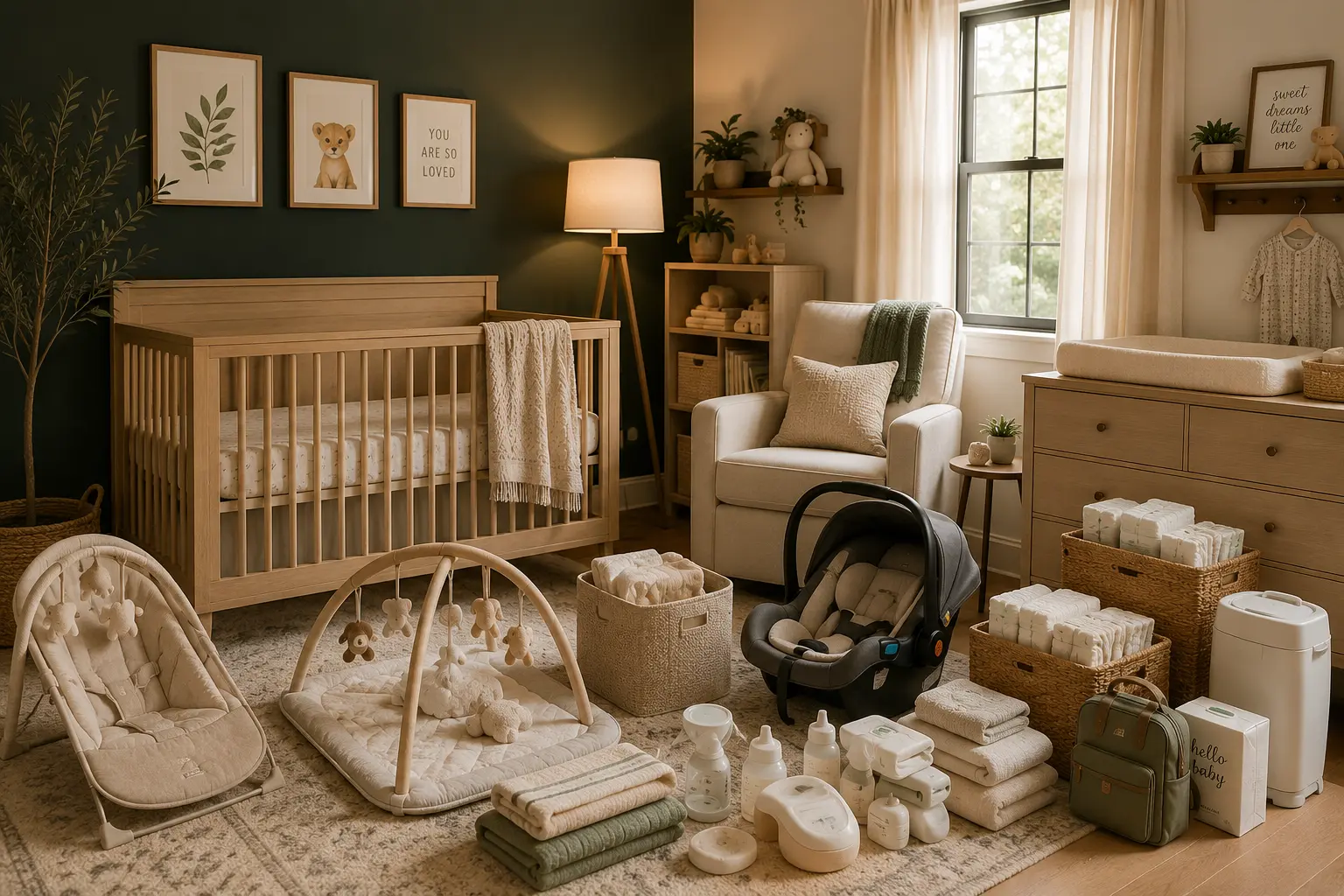
A beautiful nursery is nice, but a functional nursery is what makes newborn life easier. The best nursery setup helps you change diapers, feed your baby, store everyday supplies, and create a calm sleep environment without filling the room with unnecessary gear.
This guide focuses on nursery essentials that are actually useful: safe sleep items, diapering supplies, simple storage, soft lighting, and a few comfort items that support your routine. BennyList helps you save ideas from any store, organize baby essentials in one place, and share your registry with friends and family.
Quick Tips
Smart planning tips
Start with safe sleep before decor.
Choose washable, easy-to-clean nursery items.
Use baskets and bins instead of overbuying furniture.
Keep diapering, feeding, and sleep supplies within reach.
Avoid bulky gear unless you have the space for it.
Add nursery items from multiple stores to one BennyList registry.
Baby Guide
What to include
Use these sections as a practical starting point. Choose the items that fit your space, budget, due date, and support system.
Safe sleep setup
Start with the items that support a safe, simple sleep space.
Crib, bassinet, or play yard
Choose a sleep space that fits your room and follows current safe sleep standards.
Firm mattress
Use the mattress designed for your crib or bassinet and avoid soft add-ons.
Fitted sheets
Register for two or three fitted sheets so you have backups during nighttime messes.
Sleep sacks or swaddles
A few simple options are more useful than a drawer full of complicated sleep products.
Changing station basics
Keep diaper changes simple and within reach.
Changing pad or portable mat
A full changing pad works well on a dresser, while a portable mat is great for small spaces.
Diapers and wipes
Store enough nearby for quick changes, but keep overflow supplies elsewhere.
Diaper cream
A basic barrier cream is a nursery staple for irritation and overnight protection.
Small trash can or diaper pail
Choose what fits your home. A regular lidded trash can may be enough for many families.
Storage and organization
Good storage matters more than matching furniture.
Dresser or drawer system
A simple dresser can double as clothing storage and a changing surface.
Baskets or bins
Use bins for diapers, blankets, burp cloths, toys, and extra sheets.
Closet dividers
Helpful for organizing baby clothes by size so items do not get forgotten.
Small cart
A rolling cart can hold feeding, diapering, or postpartum supplies and move room to room.
Feeding and comfort corner
Create one comfortable spot for long newborn feeds.
Comfortable chair
A rocker or supportive chair helps during feeding, soothing, and contact naps under supervision.
Side table
Useful for water, snacks, burp cloths, pump parts, or a phone charger.
Soft lamp or night light
Low lighting helps with overnight feeds and diaper changes without fully waking everyone up.
Burp cloth basket
Keep burp cloths nearby because they get used constantly in the nursery.
Bath and care storage
Keep small care items organized before you need them.
Thermometer
A reliable thermometer is one of the most important baby health basics.
Nail care tool
Baby nails grow quickly, so keep a gentle file or clippers nearby.
Lotion and basic toiletries
Choose gentle, fragrance-free basics and avoid overbuying specialty products.
Laundry hamper
A nursery hamper is surprisingly useful because newborn laundry piles up fast.
Nice-to-have nursery items
Add these after the essentials are covered.
Sound machine
Can help create a consistent sleep environment at home and while traveling.
Baby monitor
Choose one based on your home layout and comfort level.
Blackout curtains
Helpful for daytime naps, especially in bright rooms.
Bookshelf or book basket
Board books make the nursery feel warm and are useful long after the newborn stage.
Frequently asked questions
What are the most important nursery essentials?
The core nursery essentials are a safe sleep surface (crib or bassinet with firm mattress), 2–3 fitted sheets, a diaper changing setup (changing pad with waterproof covers), a clothing storage solution, a sound machine, blackout curtains, and a comfortable spot for feeding and soothing. A video baby monitor and a nursing or glider chair are high-value additions once the fundamentals are covered.
Do I need a changing table in the nursery?
Not necessarily. A contoured changing pad secured on top of a dresser works just as well as a dedicated changing table — and the dresser remains useful long after diaper changes end. A portable flat mat is also an option if space is limited. A standalone changing table is only worth it if you have the room and prefer the height and storage it provides.
When should you set up the nursery?
Most parents aim to have the nursery ready by week 36 of pregnancy — before the typical nesting urgency and well before the due date. Washing clothing and sheets, assembling furniture, and confirming the safe sleep setup should all be done before the baby arrives. Decor and organization can continue after birth.
What nursery items can I skip?
Skip wipe warmers (usually unused after the first few weeks), oversized matched furniture sets (expensive and the baby won't notice), decorative pillows and bumpers (removed from safe sleep recommendations), large toy storage systems (newborns need almost no toys), and specialty lighting gadgets. Focus on what serves sleep, diapering, and feeding.
What is the best nursery layout for a small room?
In a small nursery, prioritize vertical storage over floor space. Place the crib along the wall farthest from the window, use a dresser-top changing pad instead of a changing table, add floating shelves for books and essentials, and skip any furniture you do not regularly use. A sound machine, blackout curtains, and a dim lamp are high-value additions that take minimal space.
How much does it cost to set up a nursery?
A functional nursery can be set up for $500–$1,500 covering a bassinet or crib, mattress, fitted sheets, changing pad, a dresser or storage solution, and basic decor. The biggest variables are crib ($100–$500+), mattress ($100–$300), and dresser ($100–$400). Blackout curtains and a sound machine add $50–$150 total. A baby monitor adds $50–$300 depending on whether you choose audio-only or video.
Can I add nursery essentials to a BennyList baby registry?
Yes. BennyList lets you add nursery essentials from any store — furniture from one retailer, blackout curtains from another, sheets from a third — and organize them alongside the rest of your baby registry. You can share one link with family and friends regardless of where each item ships from.
Related Guides
Keep planning your baby registry
Build your baby registry with BennyList
Create a flexible baby registry, add items from any store, and keep all your baby gift ideas organized in one simple place.
No spam — just seasonal gift guides and BennyList tips.