Benny List may earn a commission when you buy through links on this page, at no extra cost to you. As an Amazon Associate, we earn from qualifying purchases.
Nursery Setup Checklist for New Parents
Setting up a nursery is easier when you focus on function first. This checklist covers the sleep space, changing station, furniture, storage, lighting, and safety items that make the room practical before baby arrives.
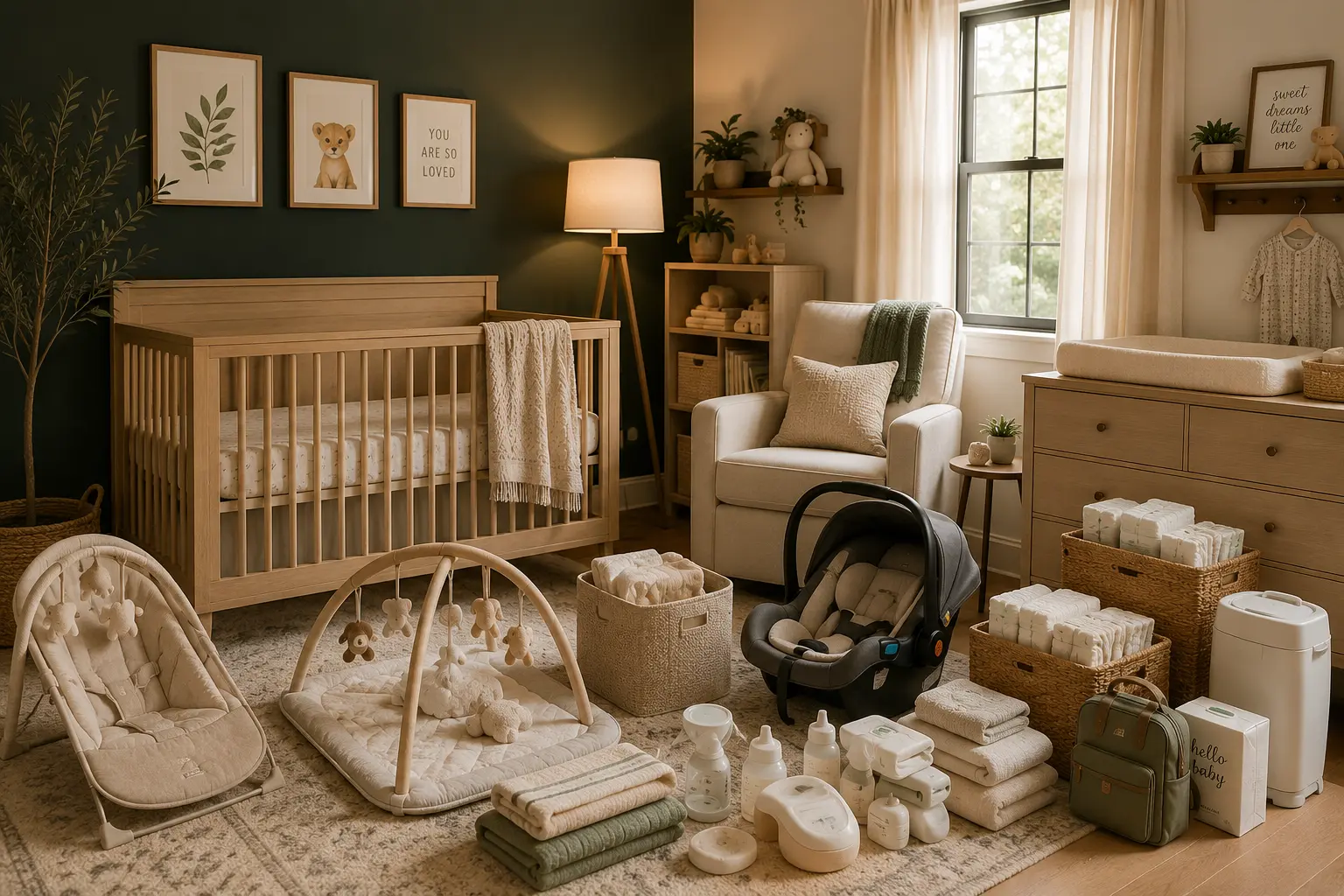
A nursery does not need to be perfect before baby arrives. It needs to be safe, organized, and easy to use when you are tired. Start with the basics: sleep, diapers, clothing storage, feeding comfort, and safety.
With BennyList’s baby registry, you can add nursery furniture, storage items, sleep essentials, and daily-use baby gear from any store into one organized list.
Quick Checklist
The nursery setup items to prioritize first
Crib or bassinet with firm mattress
3–4 fitted crib sheets
Waterproof mattress protector
Changing pad and diaper storage
Dresser or clothing storage
Comfortable glider or rocking chair
Blackout curtains and dim night light
Baby monitor and sound machine
Nursery Setup by Category
What to include in your nursery setup
Use these categories to build a nursery that works for daily routines, not just photos.
Sleep setup
Crib or bassinet
Start with a safe, flat sleep space. Many parents use a bassinet early, then transition to a crib around 3–4 months.
Firm crib mattress
Choose a firm mattress that fits snugly inside the crib with no gaps around the edges.
Fitted crib sheets
Register for 3–4 fitted sheets so you always have a clean backup after leaks or blowouts.
Waterproof mattress protector
A waterproof layer protects the mattress and makes middle-of-the-night cleanup easier.
Sleep sacks
Sleep sacks are a safer blanket alternative once baby is ready to transition out of swaddles.
Sound machine
White noise can help baby settle and mask household sounds during naps and bedtime.
Changing station
Changing pad
A waterproof changing pad or dresser topper creates a dedicated diapering spot without needing a separate changing table.
Changing pad covers
Register for 3–4 washable covers or fitted liners so you always have a clean one ready. Diaper changes get messy fast, and having extras means you are not doing emergency laundry at 3 a.m. Choose terry cloth or jersey covers that stay in place rather than smooth cotton that shifts during changes.
Diaper storage
Use a basket, cart, or drawer organizer to keep diapers, wipes, cream, and extra clothes within reach.
Diaper pail
A sealed diaper pail is helpful if the nursery is near bedrooms or shared living areas.
Wipes and diaper cream
Stock the changing station with bulk wipes, a go-to diaper rash cream, and a small basket for petroleum jelly or barrier cream before baby arrives — you will be doing many changes before you have a chance to shop. Sensitive or fragrance-free wipes are a safe default for newborns; you can always switch brands once you know how baby's skin reacts.
Laundry hamper
Choose a washable hamper or basket that is easy to carry. Baby laundry adds up quickly.
Nursery furniture
Dresser
A dresser often works better than a traditional changing table because it grows with the child.
Rocking chair or glider
Helpful for feeding, soothing, reading, and late-night wakeups. Comfort matters more than style.
Side table
A small table near the chair gives you a place for water, burp cloths, bottles, phone, and snacks.
Storage bins
Use labeled bins or baskets for diapers, extra sheets, toys, blankets, and future-size clothing sorted by size — staying organized makes the early weeks significantly less chaotic. Open-top canvas bins are easier to use one-handed than lidded boxes. A closet rod doubler is also worth adding to maximize vertical hanging space for tiny clothes.
Bookshelf or book ledges
A small book area encourages reading routines and keeps bedtime books easy to reach.
Closet organizers
Dividers, bins, and hanging organizers make it easier to manage fast-changing baby sizes.
Lighting and comfort
Blackout curtains
One of the most useful nursery upgrades. A darker room can help with naps and early bedtimes.
Night light
Choose a dimmable night light for feeds and diaper changes without fully waking baby.
Thermometer or room monitor
A simple room temperature monitor helps keep the nursery comfortable through seasonal changes.
Soft rug
A washable rug adds comfort for tummy time and makes the room feel warmer.
Fan or air circulation
Good airflow helps keep the room comfortable. A simple fan can also provide gentle background noise.
Comfortable nursing or feeding setup
Keep burp cloths, water, a small basket, and a charging cable near your chair.
Safety and babyproofing
Anchor furniture
Dressers, bookshelves, and storage units should be anchored to the wall before baby becomes mobile.
Cord management
Keep monitor cords, blind cords, lamp cords, and charging cables out of reach.
Outlet covers
Not urgent for a newborn, but worth installing before crawling begins around 6–9 months — it is much easier to do it before you need to rather than scrambling after. Sliding plate-style outlet covers are more secure than the plug-in cap style, which babies can learn to pull out. Cover all outlets in and near the nursery.
Monitor placement
Place the baby monitor where it sees the crib clearly but remains safely out of reach.
Safe sleep zone
Keep pillows, loose blankets, stuffed animals, bumpers, and extra items out of the crib.
Smoke and carbon monoxide detectors
Check batteries and placement before baby arrives, especially if the nursery is on a different floor.
Price Points
Nursery setup ideas by budget
Add a range of nursery items so guests can choose small practical gifts, mid-range essentials, or larger furniture pieces.
Under $25
- Outlet covers
- Drawer dividers
- Night light
- Changing pad liners
- Closet size dividers
- Small storage baskets
$25–$75
- Blackout curtains
- Sound machine
- Laundry hamper
- Crib sheets
- Wall shelves
- Diaper caddy
$75–$200
- Baby monitor
- Changing pad
- Bookshelf
- Washable rug
- Room air purifier
- Storage cart
$200+
- Crib
- Crib mattress
- Dresser
- Glider or rocking chair
- Bassinet
- Convertible nursery furniture
Setup Timeline
When to set up the nursery
Larger furniture and safety checks are easier to handle before the final weeks of pregnancy.
Plan the layout
Decide where the crib, dresser, chair, and changing area will go. Measure before buying furniture.
Order furniture
Cribs, dressers, and gliders can have delivery delays, so order larger nursery pieces early.
Organize essentials
Wash sheets and clothes, stock diapers, set up the changing station, and organize baby sizes.
Finish safety checks
Anchor furniture, manage cords, test the monitor, and make sure the crib is clear and ready.
Skip or Delay
Nursery items that are not essential
A beautiful nursery is nice, but daily-use function and safety matter first.
Crib bumpers
Skip these. A safe crib should be clear of bumpers, pillows, loose blankets, and stuffed animals.
Too much newborn decor
Decor is fun, but storage, sleep, and diapering function matter more in the first few months.
Large toy displays
Newborns do not need many toys. Save the space for diapers, clothing, books, and daily-use items.
A separate changing table
Useful for some homes, but a dresser with a changing pad usually lasts longer and saves space.
Overly bright lighting
Harsh lights can make nighttime wakeups harder. Soft, dimmable lighting is more useful.
Organize the Nursery
Add nursery setup items from any store
Use BennyList to organize nursery furniture, storage, sleep items, diapering supplies, and safety essentials in one baby registry.
Plan sleep first
Add crib, mattress, sheets, sound machine, and blackout curtains to your registry.
Keep safety visible
Track furniture anchors, monitor setup, cord management, and room comfort items.
Organize daily routines
Keep diapering, clothing, feeding, and storage items together in one shareable list.
FAQ
Nursery setup checklist questions
What should be included in a nursery setup checklist?
A nursery setup checklist should include a safe sleep space, crib mattress, fitted sheets, changing station, diaper storage, dresser or clothing storage, feeding chair, baby monitor, sound machine, blackout curtains, and basic safety items like furniture anchors and cord management.
When should you start setting up a nursery?
Many parents start planning the nursery in the second trimester and order larger furniture around 24–30 weeks. Aim to have the main setup finished by 34–36 weeks so you are not rushing near the due date.
Do you need a changing table in the nursery?
Not always. A dresser with a secure changing pad on top is often more practical because the dresser continues to be useful after the diaper stage. A separate changing table can work if you have extra space.
What nursery items are most important for a newborn?
The most important nursery items for a newborn are a safe sleep space, firm mattress, fitted sheets, changing pad, diapers, wipes, clothing storage, a comfortable feeding chair, and basic lighting for nighttime wakeups.
How do you make a nursery safe?
Keep the crib clear, anchor furniture to the wall, manage cords, place the monitor out of reach, avoid crib bumpers, and check smoke and carbon monoxide detectors. Babyproofing becomes more important as baby starts rolling and crawling.
Can BennyList help organize nursery setup items?
Yes. BennyList lets you add nursery furniture, baby gear, storage items, and registry essentials from any store into one shareable baby registry.
Related Guides
Keep planning your baby registry
No spam — just seasonal gift guides and BennyList tips.